Borders As Living Forces
- 19 November 2025
- Jorie Horsthuis
Through the Prism of Borders invites the reader to reflect on the complexity of borderlands and how they might be reimagined. The artwork is showcased in a traveling exhibition which opened this weekend in Bolzano, Italy.
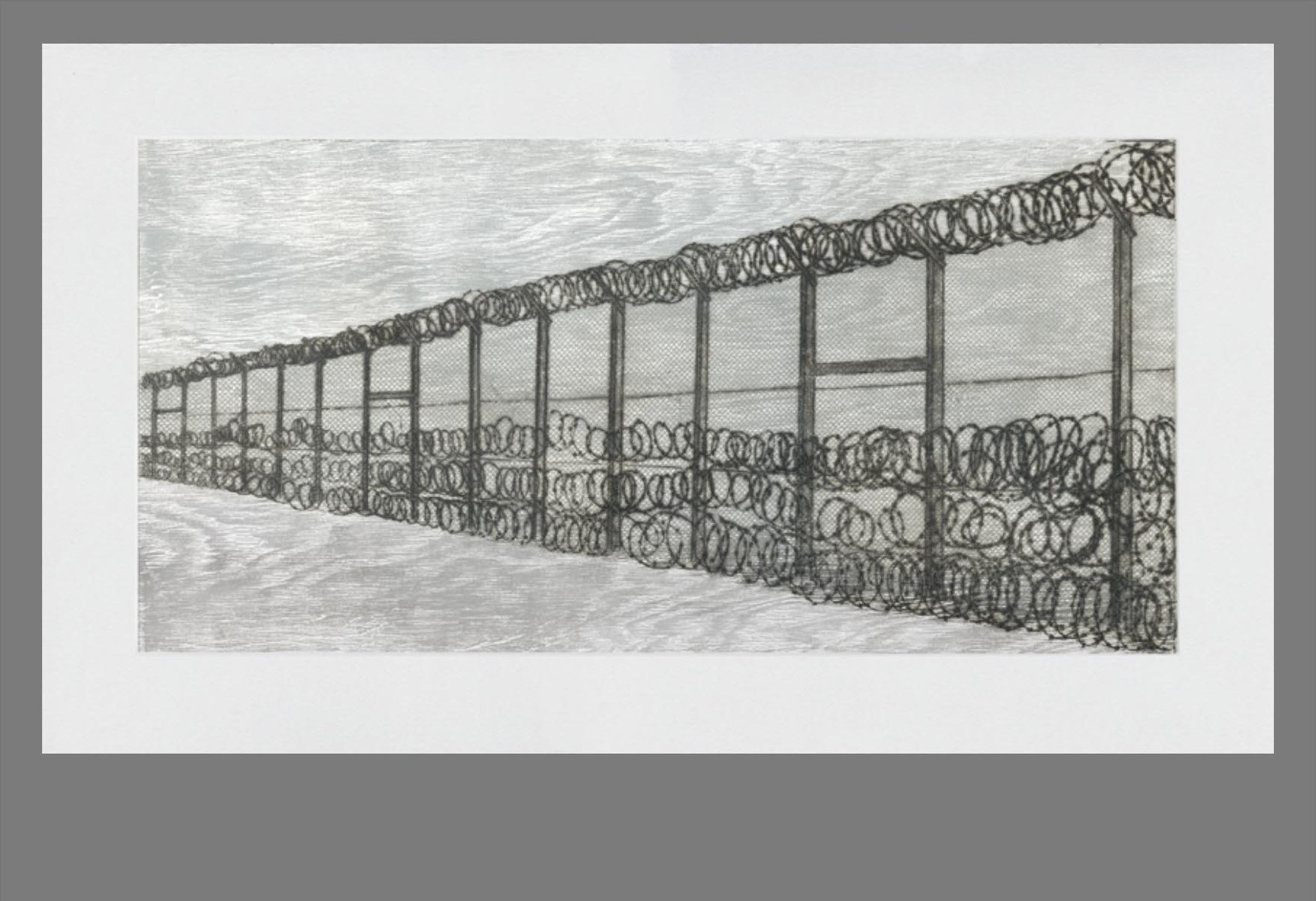
Hungary - Serbia Border Barrier, from the ongoing project Documenting Border Barriers.
Pamela Dodds. Courtesy the artist and Lungomare‘The border is a line that birds cannot see. (…) The border says stop to the wind, but the wind speaks another language and keeps going.’ These lines from Alberto Rios’ poem ‘The Border: A Double Sonnet’, sets the tone for the book Through the Prism of Borders: Beyond the Threshold, Art and the Spaces in Between. The publication brings together artistic and academic voices to explore borderlands as dynamic and relational spaces shaped by history, landscape and human experience.
The book is the result of a three-year long project that brings together the work of seven artists, produced across two European border regions: Poland and the Czech Republic, and Bulgaria, Greece, and Turkey. The accompanying traveling exhibition opened this weekend in Bolzano, Italy, taking place across four museums and in public spaces throughout the city until February 7, 2026. Both the book and the exhibition are part of the larger European research program ‘B-Shapes: Borders Shaping Perceptions of European Societies’, that analyses how borders remain a key factor in how we understand societies.
In the introduction to the book, the exhibition’s curators and editors Katia Anguelova, Angelika Burtscher and Marion Oberhofer tell us that the past is never truly gone. ‘In border regions, the legacies of empires, wars and treaties are not just distant memories but living forces that continue to structure contemporary life, defining who can move, settle and belong.’ Borders shape stories and identities, and by working with artists, academics and local residents, the curators are on a mission to discover how frontiers are constructed, contested and continuously redefined.
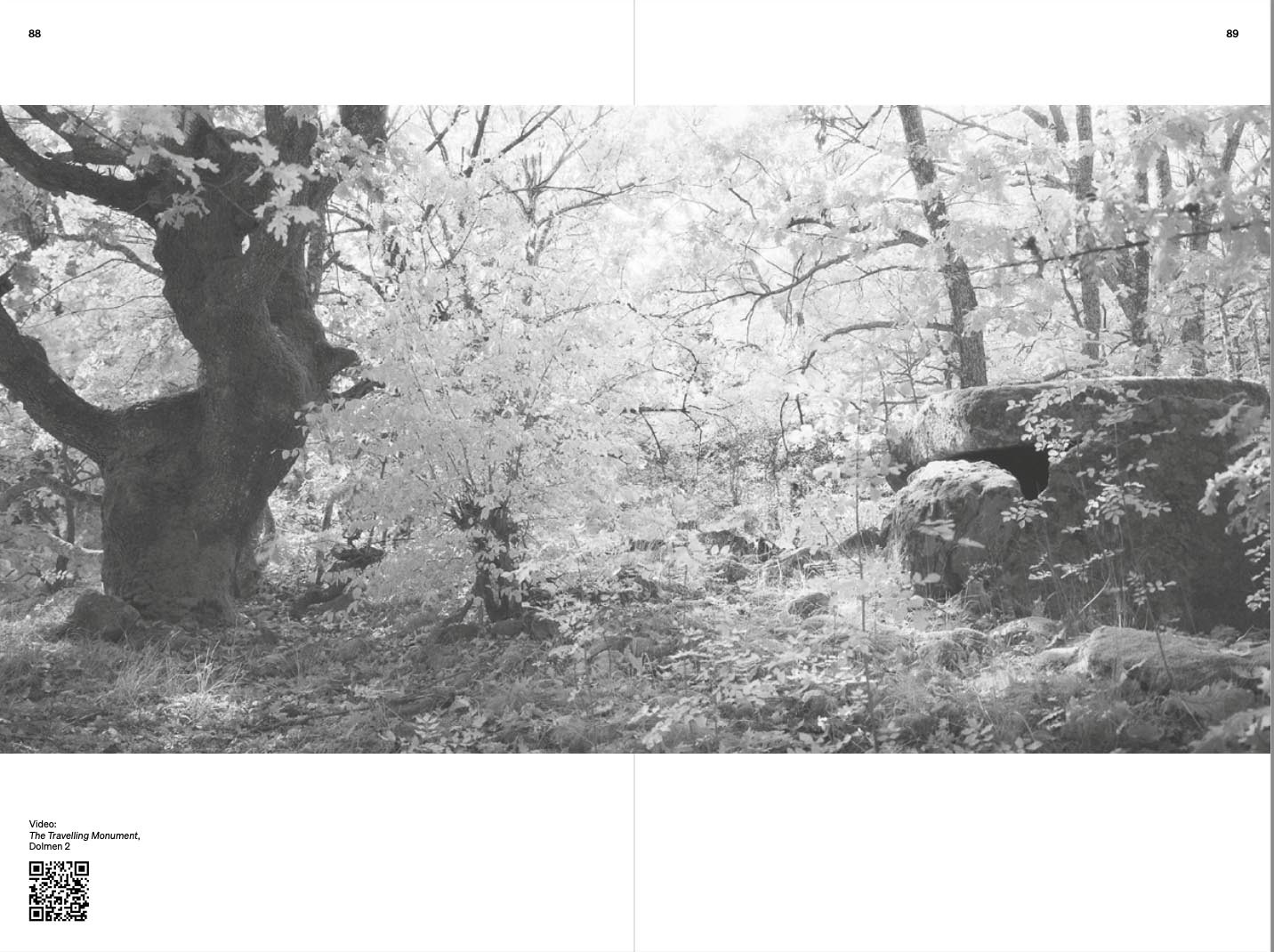
The Travelling Monument, Dolmen 2 (2025).
Boris Missirkov & Georgi Bogdanov. Courtesy the artists and LungomareOne of the most interesting works of the project began with the discovery that there are numerous monuments for border guards in Bulgaria, but not a single one for the people who tried to flee during the Cold War. So, with The Traveling Monument, Bulgarian artists Boris Missirkov and Georgi Bogdanov decided to create an imaginary counter-monument, dedicated to those who tried to escape from the Eastern Bloc. The artists were impressed by an old man who led them to an ancient oak tree and recounted how, in the early 1980s, a human skeleton was nailed to it as a grim warning to potential escapees. ‘This haunting account encapsulated the cruelty and fear of an era’, the artists recount in an elaborative interview with the curators. ‘A memory that continues to challenge our understanding of borderlands.’
Their imaginary counter-monument to people whose lives were lost in a desperate bid for freedom - still only a maquette - was produced next to fourteen panoramic photographs of the border areas where these escape attempts were frequently made. The reader can watch short videos via QR-codes that complement each picture, in which fragments from propaganda footage from the 1970s and 1980s are juxtaposed with eyewitness accounts of border crossings and attempts.
Working on the edge of the European Union, Missirkov and Bogdanov opened up a space to question what Europe really is. ‘[It] underscores that these margins are not simply peripheral; they are sites of cultural mingling, resistance and transformation’, they state. ‘They challenge the notion of a clear-cut East versus West and invite us to view Europe as a fluid tapestry of overlapping histories and identities.’
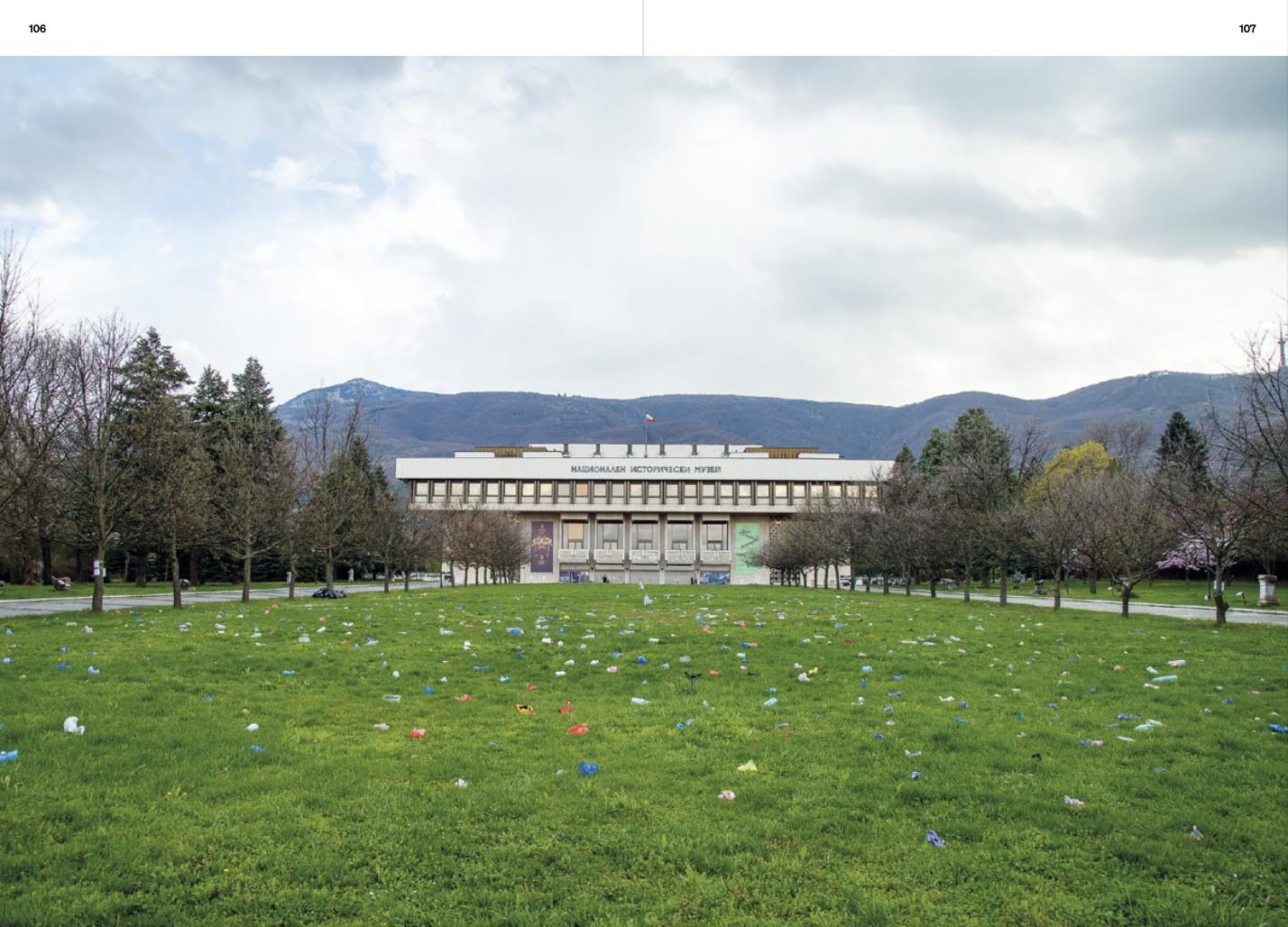
Ivan Moudov, Border Flowers (2025). Installation view: National History Museum, Sofia.
Boris Missirkov. Courtesy the artist and LungomareBorder Flowers is another artwork that calls for the reinterpretation of the dynamics between the centre and the periphery. Bulgarian artist Ivan Moudov gathered plastic waste that was scattered along the Bulgarian-Turkish border and assembled it in front of the National Museum of History in Sofia. The museum authorities removed the work before the larger exhibition was opened. ‘This removal reveals an emblematic short circuit: (…) that between art and power’, the curators write, reflecting on the way the work provoked contrasting reactions. ‘What happens when a national museum opens its doors onto neglected landscapes?’
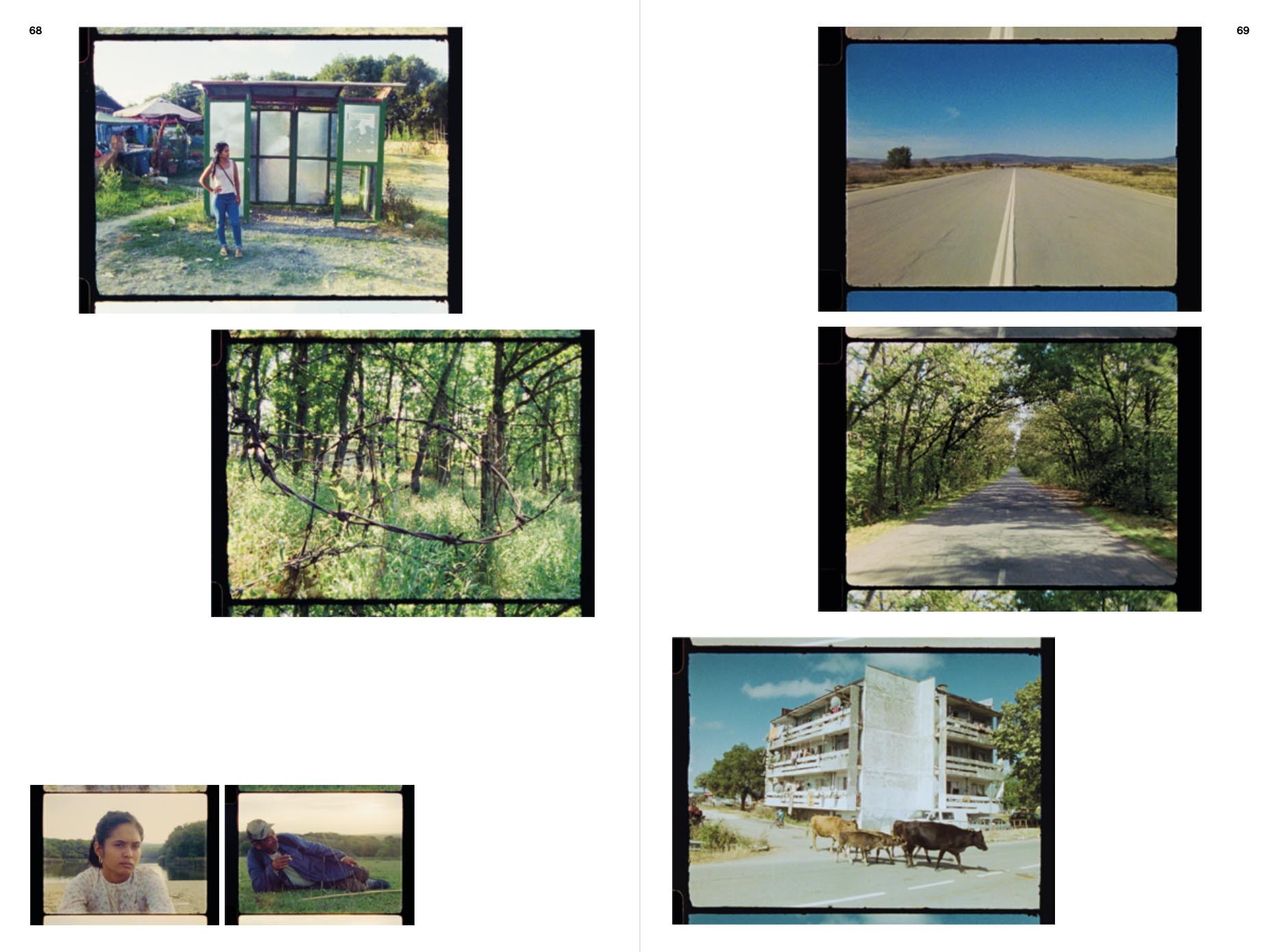
Film stills from The Answer is Out There (2025).
Anna de Manincor (Zimmerfrei). Courtesy the artist and Lungomare.In the documentary film The Answer Is Out There, Anna de Manincor focuses once more on the very edge of the European Union. She went to the Black Sea area and to the sparsely populated region of Strandja, where the Resovska river serves as the natural division between Bulgaria and Turkey. As in most border areas, the inhabitants from both sides have more in common with each other than with the citizens from their own capitals. The film narrates the experiences of these ‘borderlanders’ and shows how their lives are influenced by the fluidity of the landscape.
The stills of this film in the book trigger curiosity about the actual work that is screened at the exhibition. This is a recurring emotion when reading the book: at some points, it feels more like a catalogue for the exhibition than an independent work in and of itself. Even more so, the accounts of encounters with local residents seem a bit out of place. These stories do not immediately resonate, simply because the reader was not present during these interactions and so cannot share the experience. Integrating these parts into the book might have been driven foremost by a need for accountability for the overall project.
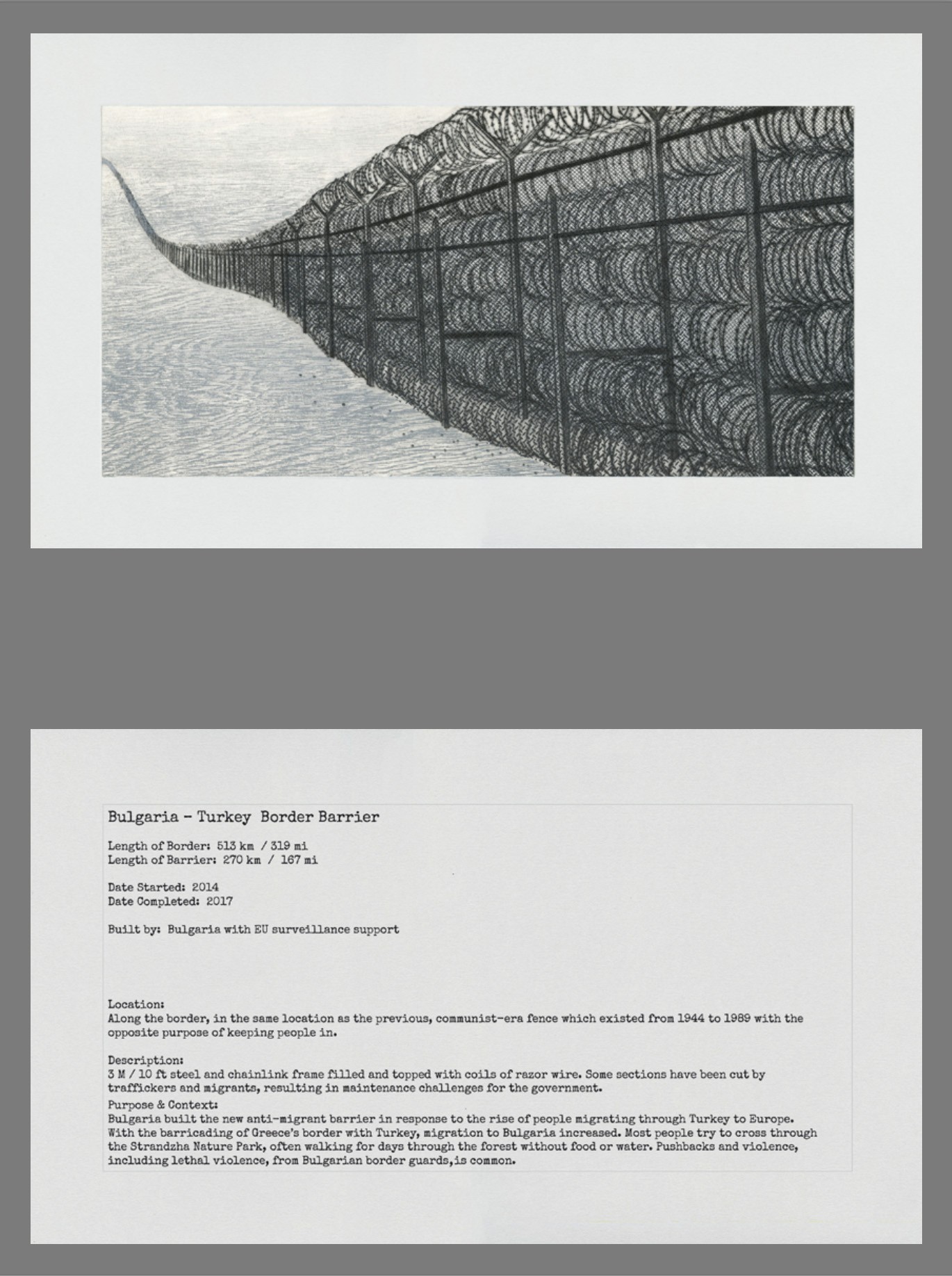
Bulgaria - Turkey Border Barrier, from the ongoing project Documenting Border Barriers.
Pamela Dodds. Courtesy the artist and Lungomare.An outlier in the book, albeit a very strong one, is the ongoing work Documenting Border Barriers by Canadian artist Pamela Dodds. She explores border fences and documents them through etching and relief printing. Her work exposes the physical and symbolic forces of division and control. The contrasting functions of barriers create a disconnect in the brain: barbed wire kept people in during the Cold War era, and nowadays mostly keeps people out. The Bulgaria-Turkey border barrier is a telling example: a new fence was recently erected to keep migrants out of Bulgaria in exactly the same place that the previous, communist-era fence was built to prevent people leaving the Soviet-led Eastern Bloc.
All in all, the book is very diverse and rich, but also quite overwhelming. Removed from the context of the exhibition, the reader might get lost in theoretical reflections that meander over the pages and might not feel the impact of certain images or accounts without the shared experiences of actually being in the room. Yet perceived as a catalogue of the exhibition or the overall project, it absolutely provides additional thoroughness to the work and invites the reader to reflect on the complexity of borderlands and how they might be reimagined. At a time when toxic nationalism rises in Europe and borders are being reified and strengthened, the book is an urgent antidote.
Through the Prism of Borders: Beyond the Threshold, Art and the Spaces in between (2025) is edited by Katia Anguelova, Angelika Burtscher and Marion Oberhofer. The book is published by Kunstverein Publishing Milano. The traveling exhibition can be visited in Bolzano, Italy, until February 7, 2026.
Jorie Horsthuis is a Dutch journalist and co-founder of De Facto. She writes about borders and organises Off the Map, the live events of De Facto.
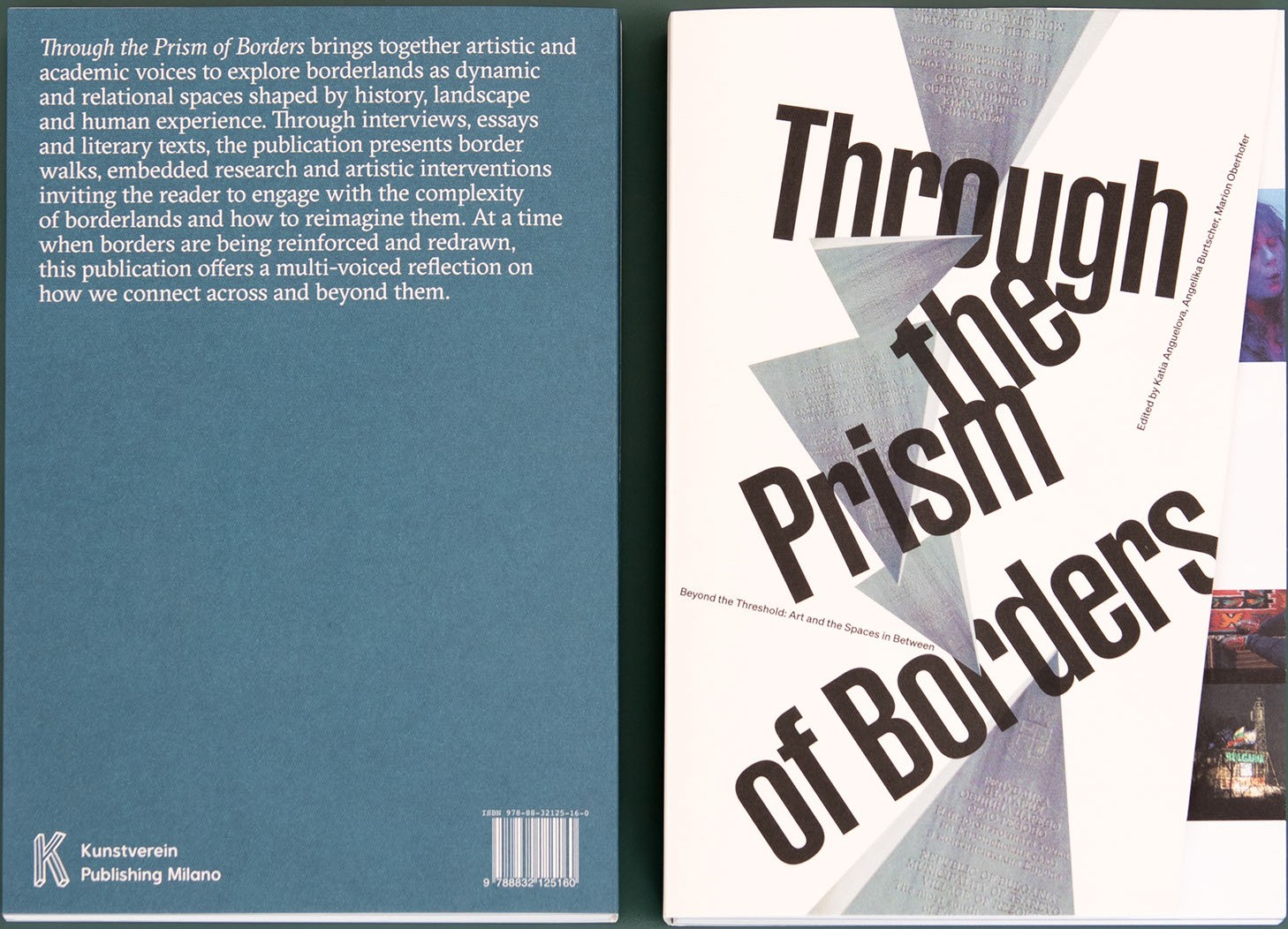
Cover of the book Through the Prism of Borders: Beyond the Threshold, Art and the Spaces in Between (2025).
Kunstverein Publishing Milano