On the Move
- 29 December 2025
- Author Suzanne Hendriks
Walking through art museum Fenix (Rotterdam, the Netherlands), you get the feeling that moving around is the prime human condition. Five favourites by De Facto’s Suzanne Hendriks.

Fenix is an art museum about migration and movement. It opened in May 2025 in Rotterdam and has 16.000 square meters of room to showcase objects, art and photos about humans on the move. It’s interesting to see visitors move through the building and listen in on their opinions and stories. Moving, and moving across borders is something almost everyone has experienced and as you move through the museum, you get the feeling that moving around is the prime human condition.
The building is pretty epic to start with. It’s on the location where millions of emigrants left Europe, to emigrate to mainly the States. On top of the building is a huge stainless helix that doubles as a viewpoint. Nicknamed the Wokkel (curly crisp), this artwork is called Tornado and is designed by Ma Yansong. It connects all floors and the staircases also symbolise the central theme of Fenix: migration.
In the huge hallways, there are works by internationally acclaimed artists as well as talents on the rise. They are organised in three main exhibitions: a hall with photographs, a hall with a maze of suitcases and stories and a hall called All Directions, with a wildly varying collection of works by over a hundred artists, from all over the world.
It’s a museum you can easily spend a half or even whole day in (also because the food is great too). But to give you some directions, here are five of my favorites. Go and find out for yourself what thoughts and associations you have, as the museum overtly keeps an open mind and doesn’t really take a political stand.
1. De Facto loves maps. But a world map made out of plastic shoppers, which migrants all over the world use to carry their belongings in, is something new and thought provoking. The artwork is called Patterns of Migration (2015) and is by Dan Halter. The contrasting patterns of the bags stand for national borders.

Patterns of Migration (2015), by Dan Halter.
Suzanne Hendriks2. A copy of the World Passport, issued by the World Citizen Government, a non-profit organization founded in 1954 by Garry Davids. It looks like a legit passport but is a fantasy travel document but moreover: a philosophy. It calls upon universal human rights, freedom of travel, and transcending nation-state borders by declaring individuals as sovereign citizens of the world, not tied to any single country. The site of the organisation lists countries that accidentally, or ‘de facto’, recognized the passport by stamping it or providing visas.

Copy of the World Passport.
Suzanne Hendriks (left) and Roely Oldenhuis (right)3. Antarctic Agreement. Placed in a glass display is the equally fragile artwork ‘Agreement with Nature’ (2018) by Esther Kokmeijer, who was also De Facto’s guest on one of our live events. Printed on ultrathin sheets of porcelain are the treaties made about the ‘global commons’ that consists of Antarctica, all of the oceans, the atmosphere and outer space. The symbolism is striking, as these treaties are as fragile as the porcelaine sheets.

‘Agreement with Nature’ (2018) by Esther Kokmeijer.
Suzanne Hendriks4. Warped wall. Another favorite is the artpiece by Vincenzo De Cotils, called ‘Ode’ (2019). A distorted and contorted reflecting wall, symbolising whoever builds a border wall, inevitably develops a warped understanding of the world and the people in it. Close to this piece you can also find a piece of the Berlin Wall.
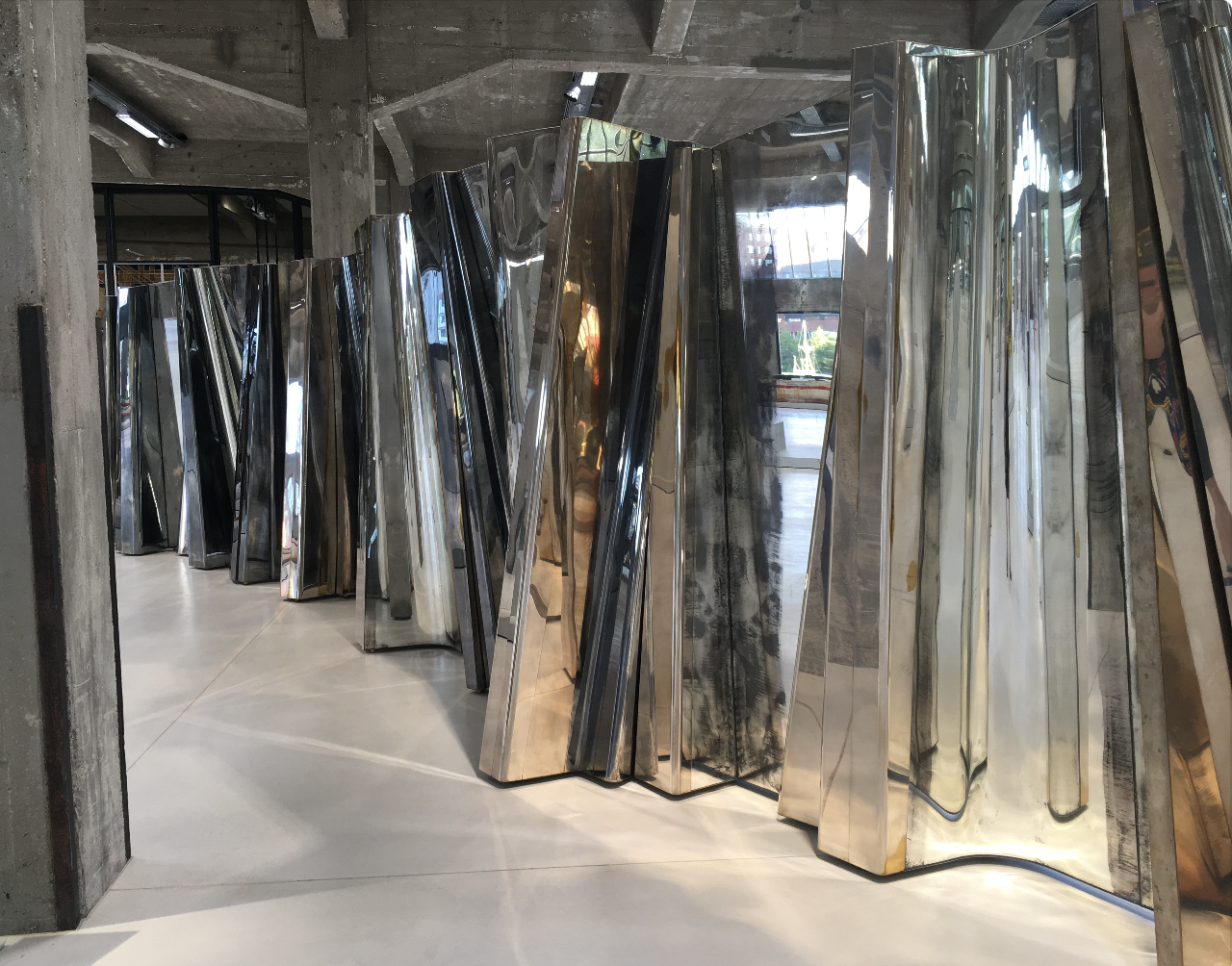
‘Ode’ (2019), by Vincenzo De Cotils.
Suzanne Hendriks5. On this wall, you can find eighteen fictional passport stamps of places with disputed border crossings and terms related to them. The artwork is by Barthélémy Togue and is called ‘Borders’ (2011).

‘Borders’ (2011), by Barthélémy Togue.
Suzanne HendriksHonourable mention for the Erasmus Passport, initiated by the Rotterdam support center for the undocumented. It was invented to enable healthcare for people who don’t have identification documents. The Family of Migrants is an impressive exhibition about departures, journeys and arrivals in around two hundred photographs. And the maze of suitcases, with stories of people arriving in Rotterdam is interesting too.

Practical info: Address: Paul Nijghkade 5, 3072 AN Rotterdam.
Open all days, from 10 a.m. - 5 p.m. Check out their site: https://www.fenix.nl/en/