Off the Map #7 at MIMIK
- 28 September 2026
- Author Suzanne Hendriks
With correspondent Michiel Driebergen about life in Ukraine and Kamil and Gulendem Abas playing traditional Uyghur music. Plus: Jorie Horsthuis about the Balkans and Suzanne Hendriks with a quiz full of geo-oddities.
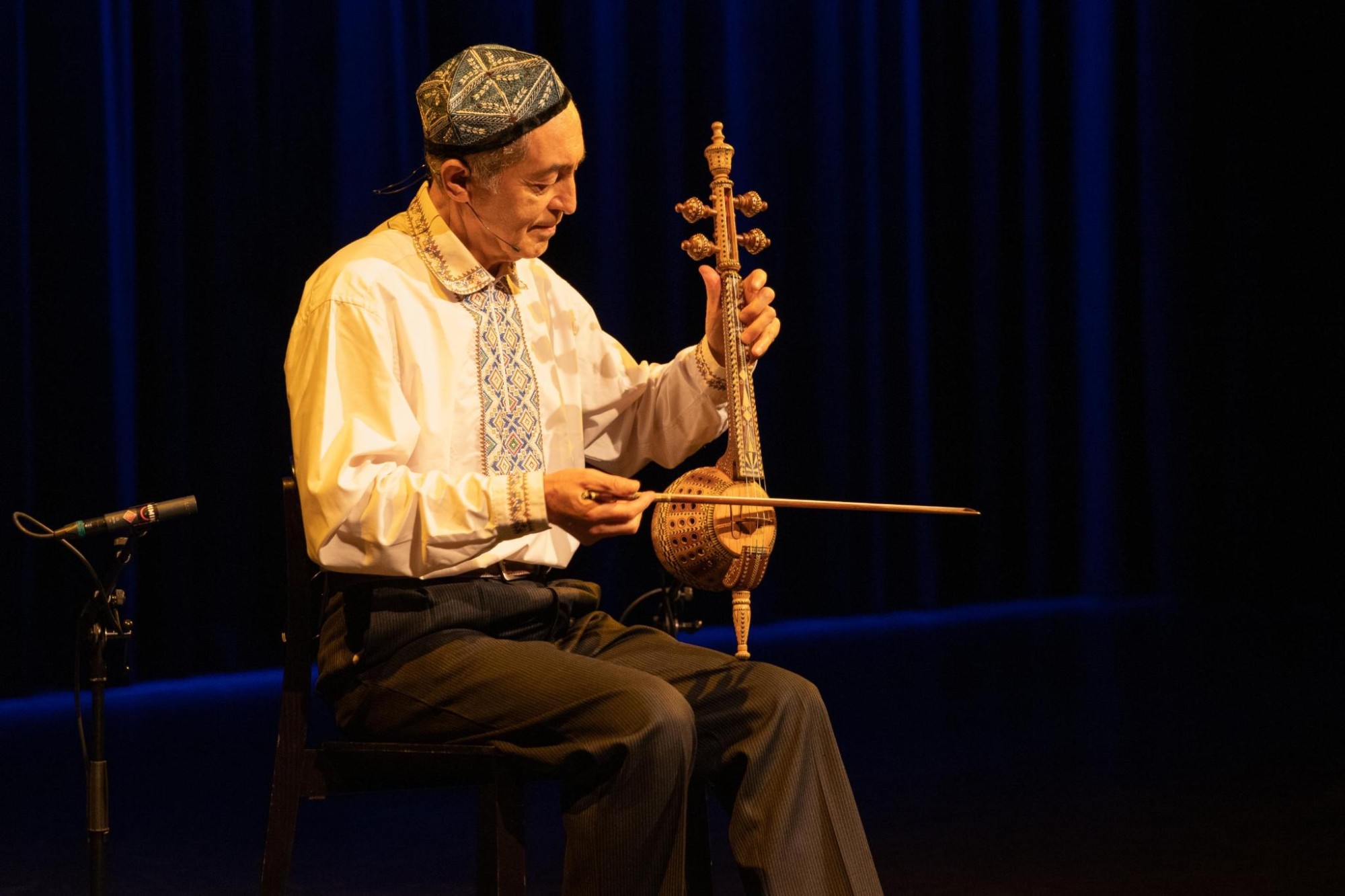
Kamil Abas playing the Uyghur instrument ghidjäk.
Jerney van den BurgBorders — they certainly were hard to miss summer. The exclave of Ceuta was constantly in the news, as were the expulsions by the Trump administration. On a holiday-level, perhaps you found yourself stuck in a traffic jam at an extra ‘temporary’ border check within the Schengen zone, or maybe you breezed across national borders on holiday thanks to your fabulous Dutch passport.
Eleven months after our last visit to Deventer, and after a tour that brought us to Maastricht, Nijmegen, Vlieland and Amsterdam, we were happy to be back at MIMIK, Deventer. Moving from the Taklamakan desert in East Turkestan to Kosovo, and from the frontlines of Ukraine to Togo, we managed to cover a lot of ground.
Our audience was — as usual — a rich source of stories, as they shared with us their experiences as response to our question ‘Which border turned out to be more closed than expected?’ ‘We thought we could visit Belarus for a day, from Lithuania,’ a visitor wrote, ‘but after a lot of fuss with the Belarusian border guards, we were not allowed to pass. We weren’t even allowed to turn the car on Belarusian soil.’ Someone else wrote: ‘A border that might seem closed off, turns out to have openings somewhere, somehow after all.’ Our youngest visitor ever — 10-years old! — could instantly describe the Kosovar flag, prompting a spontaneous applause by the rest of the audience.
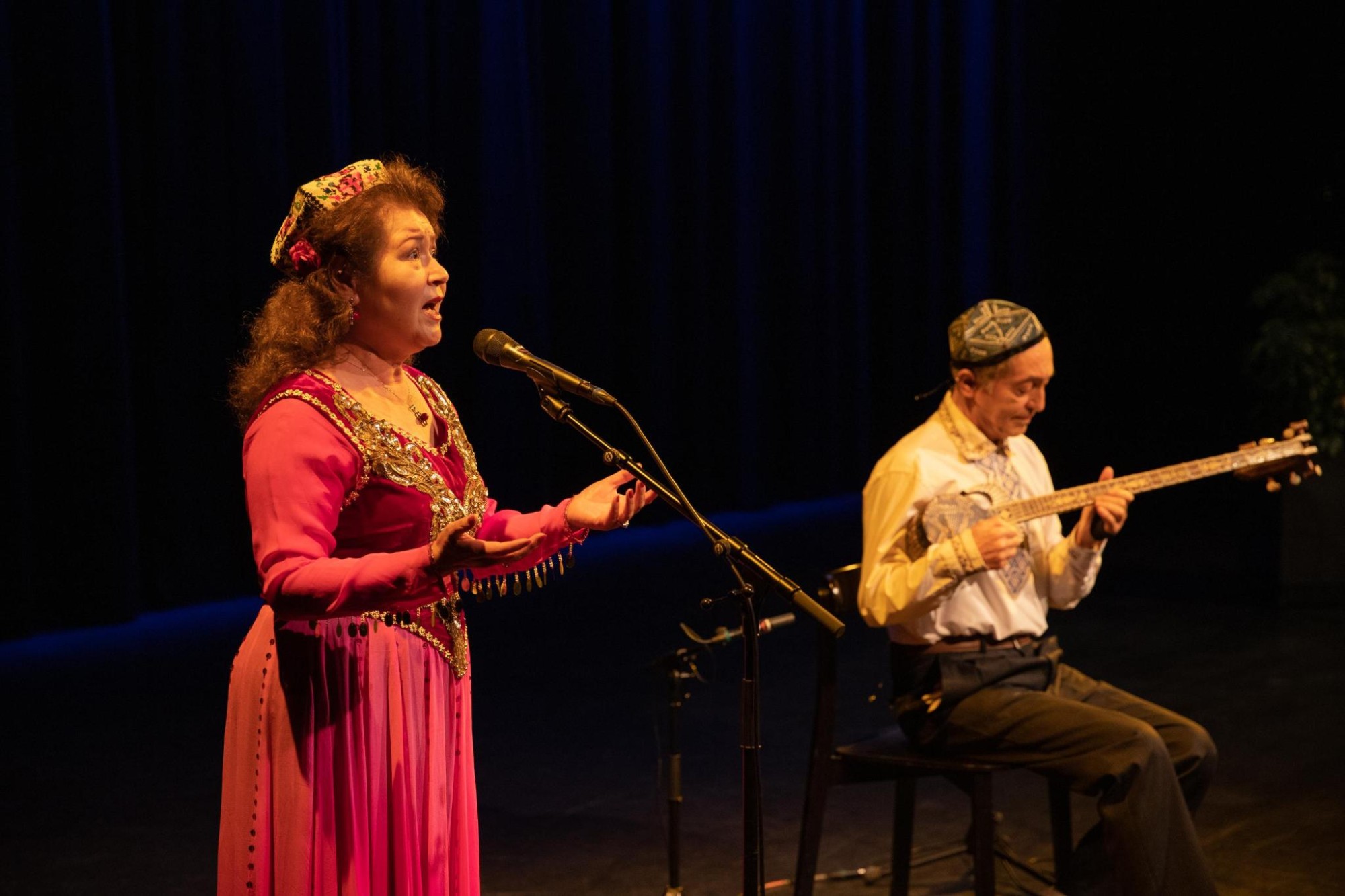
Gulendem and Kamil Abas playing traditional Uyghur music.
Jerney van den BurgThe evening was kicked off by Kamil Abas, playing the ghidjäk, a traditional and beautifully crafted Uyghur instrument. He played ‘Caravan’, a song about the Taklamakan desert, one of the largest deserts in the world. This area in the northwestern part of China is historically known as East-Turkestan and is home to the Uyghurs. The word Uygur means unity, connectedness. The second set Kamil played on the ghidjäk, accompanied by his spouse Gulendem, who sang ‘Sighinish’, a song about longing for a lover beyond a border. The original writer of the lyrics died in prison in the early 1970s after she was arrested by the Chinese police. They ended with the danceable song ‘Lale-Reyhan’, a cheerful song the Uyghur community in the Netherlands also likes to play when they are getting together.
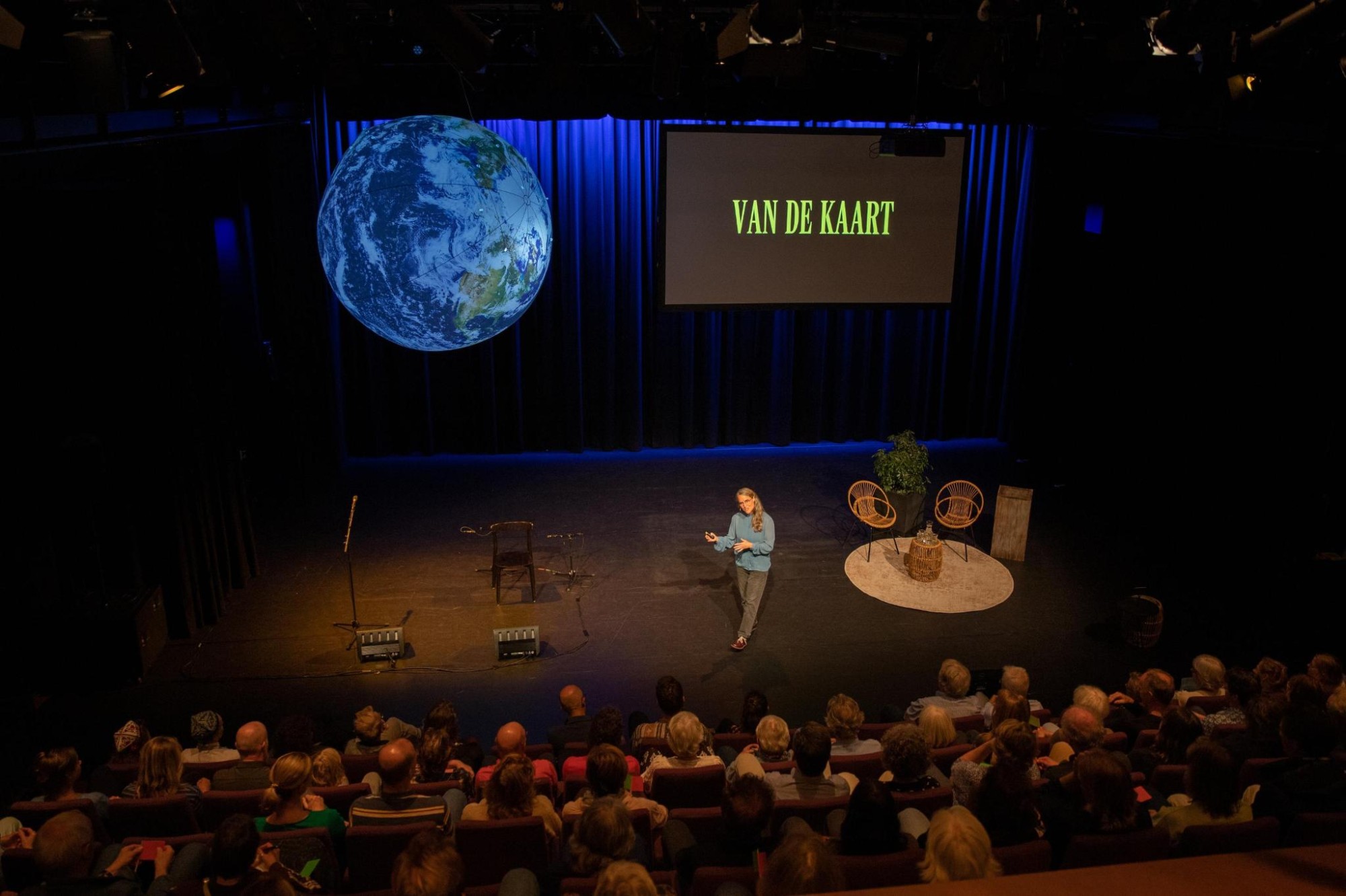
Journalist Jorie Horsthuis sharing her experiences from the Balkans.
Jerney van den BurgJournalist Jorie Horsthuis shared some of her experiences from the Balkans, where borders keep being contested and tensions have been rising again in the last weeks. With the conviction of Hashim Thaçi at the Kosovo Chambers and the triumphant funeral of Ratko Mladic in Belgrade, it was clear that brutal wars from more than 25-30 years ago still draw long shadows into the present.
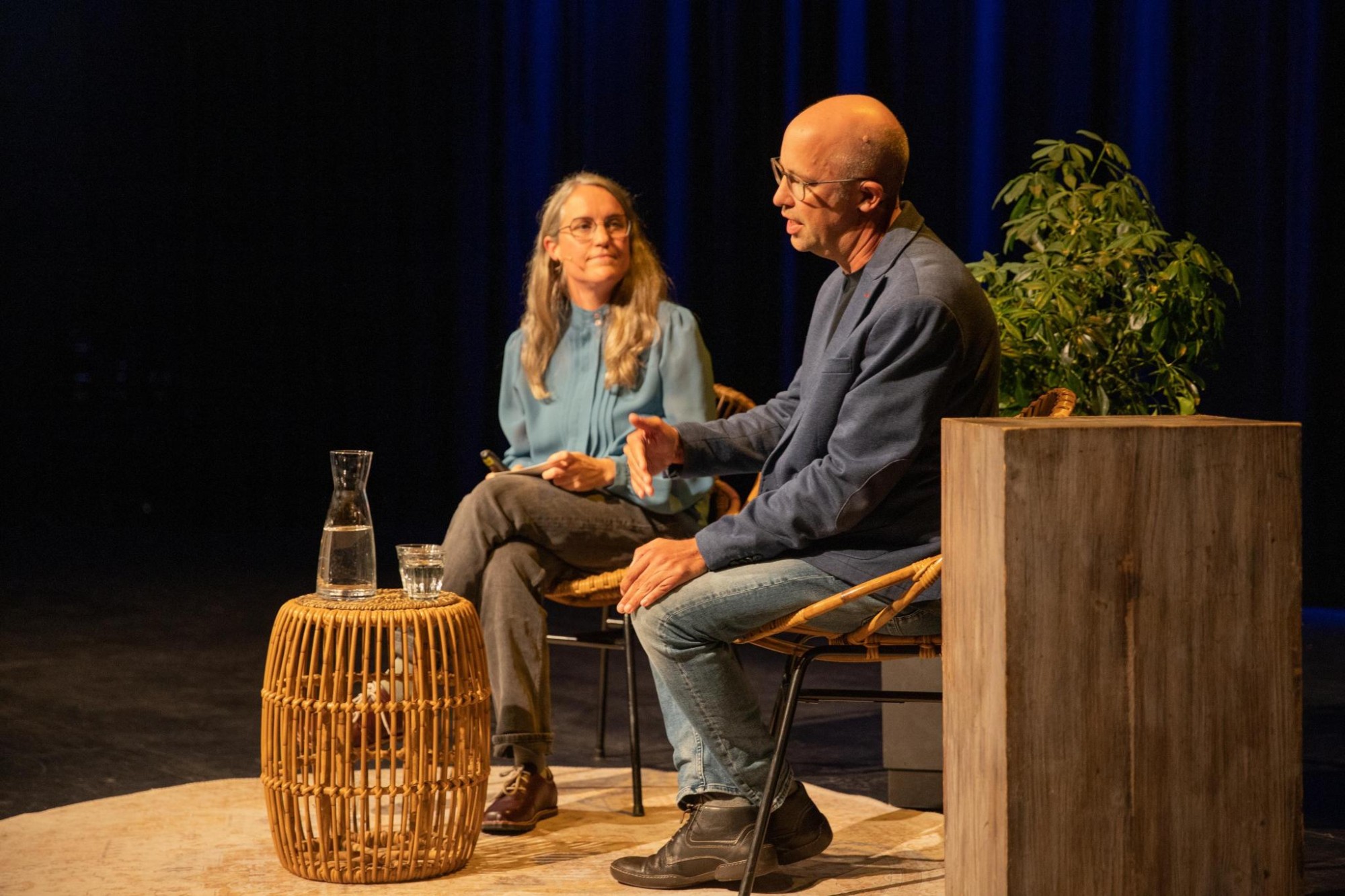
Ukraine correspondent Michiel Driebergen interviewed by Jorie Horsthuis.
Jerney van den BurgThis will most likely also be the case for Ukraine in the next decades. Even if the war should cease soon, the scars and shadows are deep and it’s hard to see how the people that used to be neighbors will recover from all of the destruction and polarisation. Dutch correspondent Michiel Driebergen (Trouw, Bureau Buitenland) has been a close witness to the war in Ukraine since the beginning, already reporting about Ukraine for over thirteen years. How do people live on the border of peace and war, and on ever shifting borders?
We warmly recommend listening to the podcast series Michiel has made in cooperation with Edwin Koopman: ‘City at War’ (Stad in Oorlog, VPRO 2023), and ‘Poet at the front line’ (Dichter aan het front, VPRO 2025). In Mimik, we listened to some audio fragments and looked at pictures of daily life at the frontline, which can be eerily normal. There is habituation, living through a war, and at the same time, one never gets used to it. As a journalist, Michiel chooses to focus on human narratives instead of geopolitical analyses. He stresses that in this conflict, we, the Westerners, are only present at the western side of the border. He is aware of his professional and personal limits, but, at the same time, he is convinced that the role of journalists is more essential than ever.
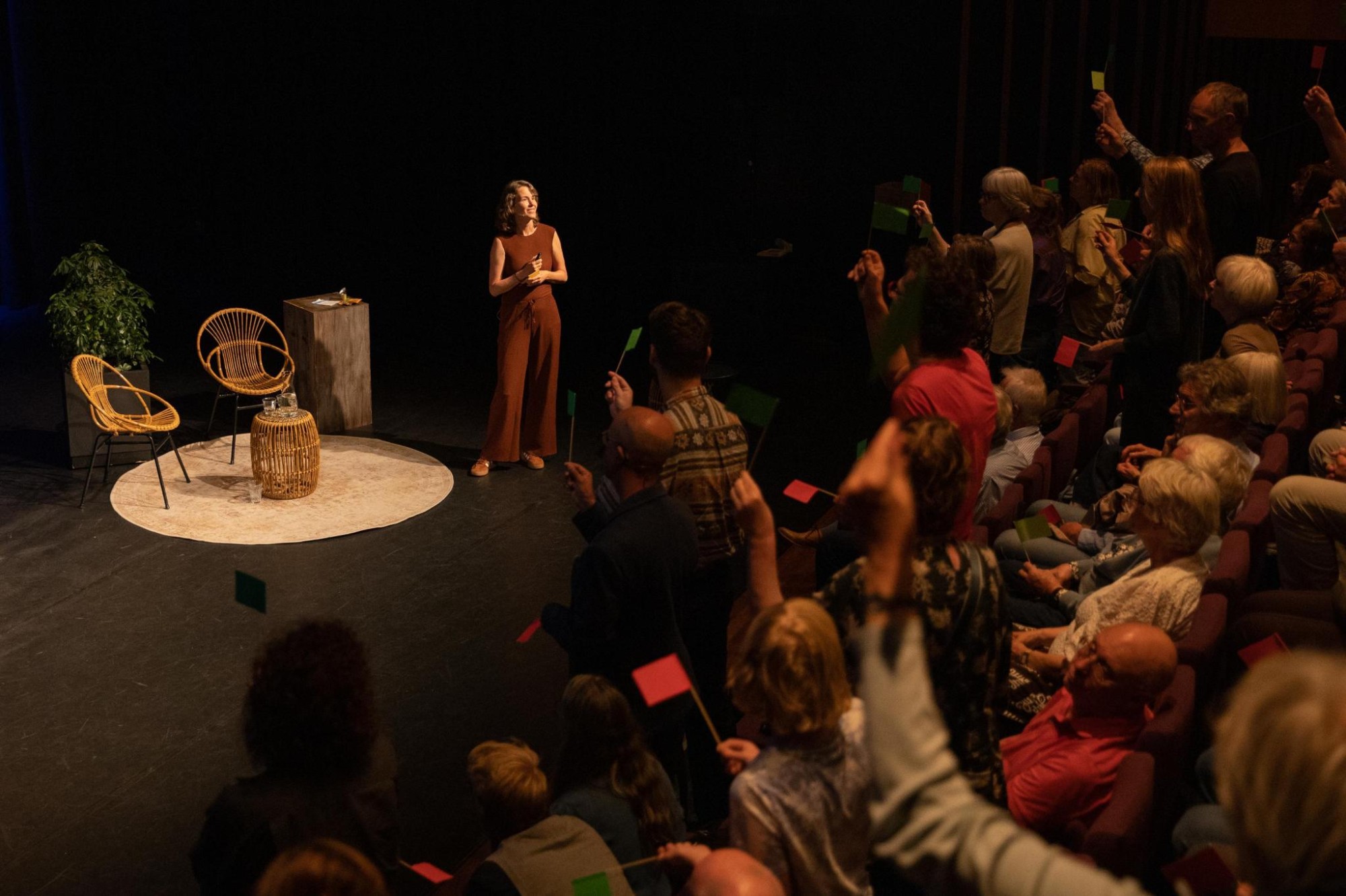
Researcher Suzanne Hendriks conducting her notorious quiz.
Jerney van den BurgThe evening was topped off with a quiz by researcher Suzanne Hendriks, where there was some fierce flag waving. The audience battled it out until a shoot-out. The winner took home a Somaliland set of flavours & fragrances, brought to us by one of our explorers, Aron Goossens.
This Winter, we will organise a film weekend on the island of Vlieland, and early 2027, we will be back with Off the Map. Subscribe to our newsletter to stay informed.